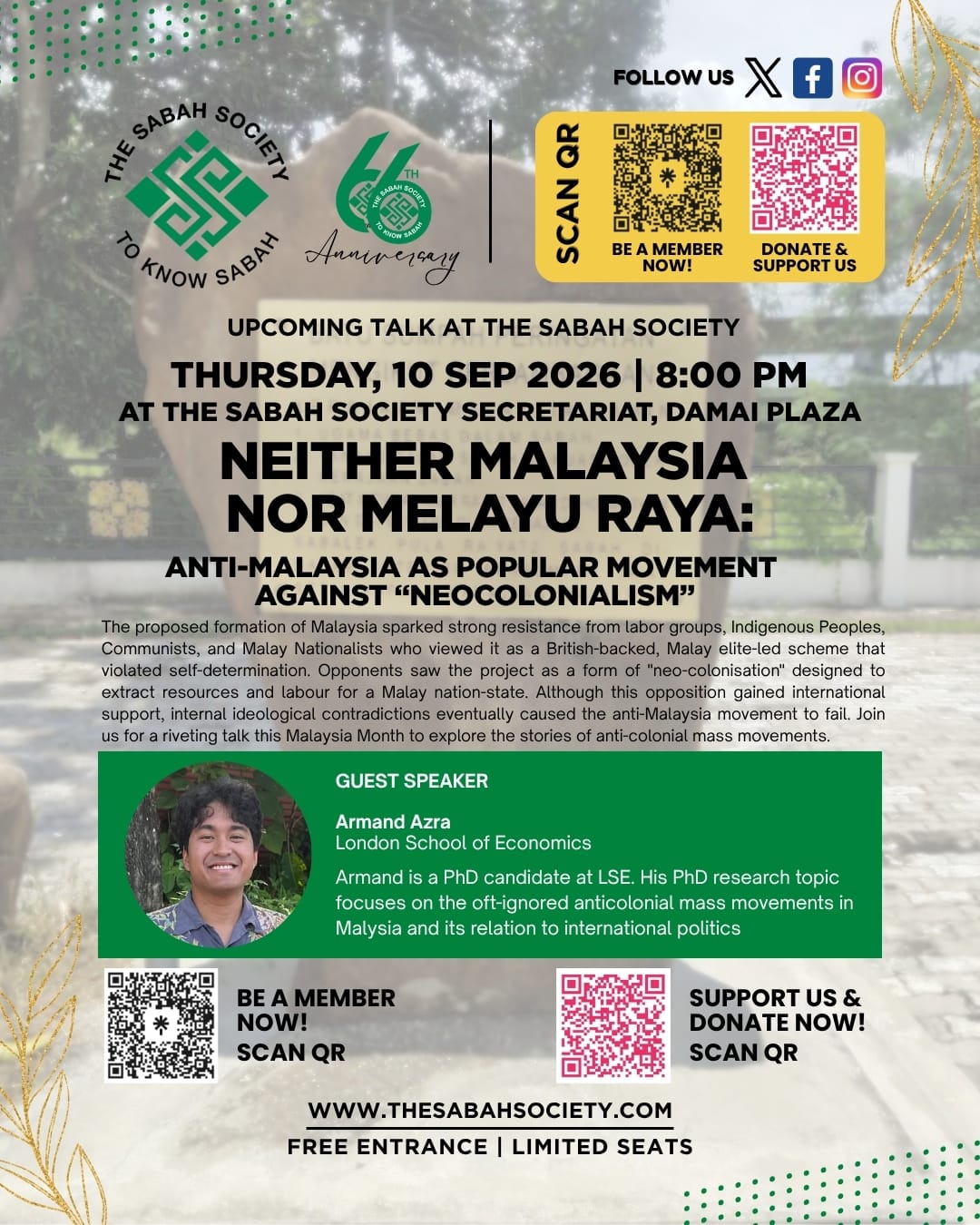
- The proposed formation of Malaysia sparked strong resistance from labor groups, Indigenous Peoples, Communists, and Malay Nationalists who viewed it as a British-backed, Malay elite-led scheme that violated self-determination. Opponents saw the project as a form of “neo-colonisation” designed to extract resources and labour for a Malay nation-state. Although this opposition gained international support, internal ideological contradictions eventually caused the anti-Malaysia movement to fail.
- Armand Azra is a PhD candidate in the London School of Economics and Political Science. Armand is an active scholar, writing blogs and articles for platforms and journals such as the LSE Southeast Asia Centre blog and Indonesia and the Malay World. Armand has also been active in dissemination of his work and engagement with civil society. Armand was a speaker at the International Youth Rationalisme Forum 3.0 and he also presented his research to the Monsoons Book Club hosted by the Monsooners and Demokratik UK. Armand has also worked under civil society organisations such the Institute of Democracy and Economic Affairs (IDEAS) Malaysia, producing a quantitative report regarding intra-regional migration in Southeast Asia. From 2021 to 2022, Armand conducted field research under the SEAC PhD fieldwork fund and the Arts and Humanities Research Council-funded ‘Socialist Internationalism in the Afro-Asian World’ project under the University of Bristol.

This event has passed.