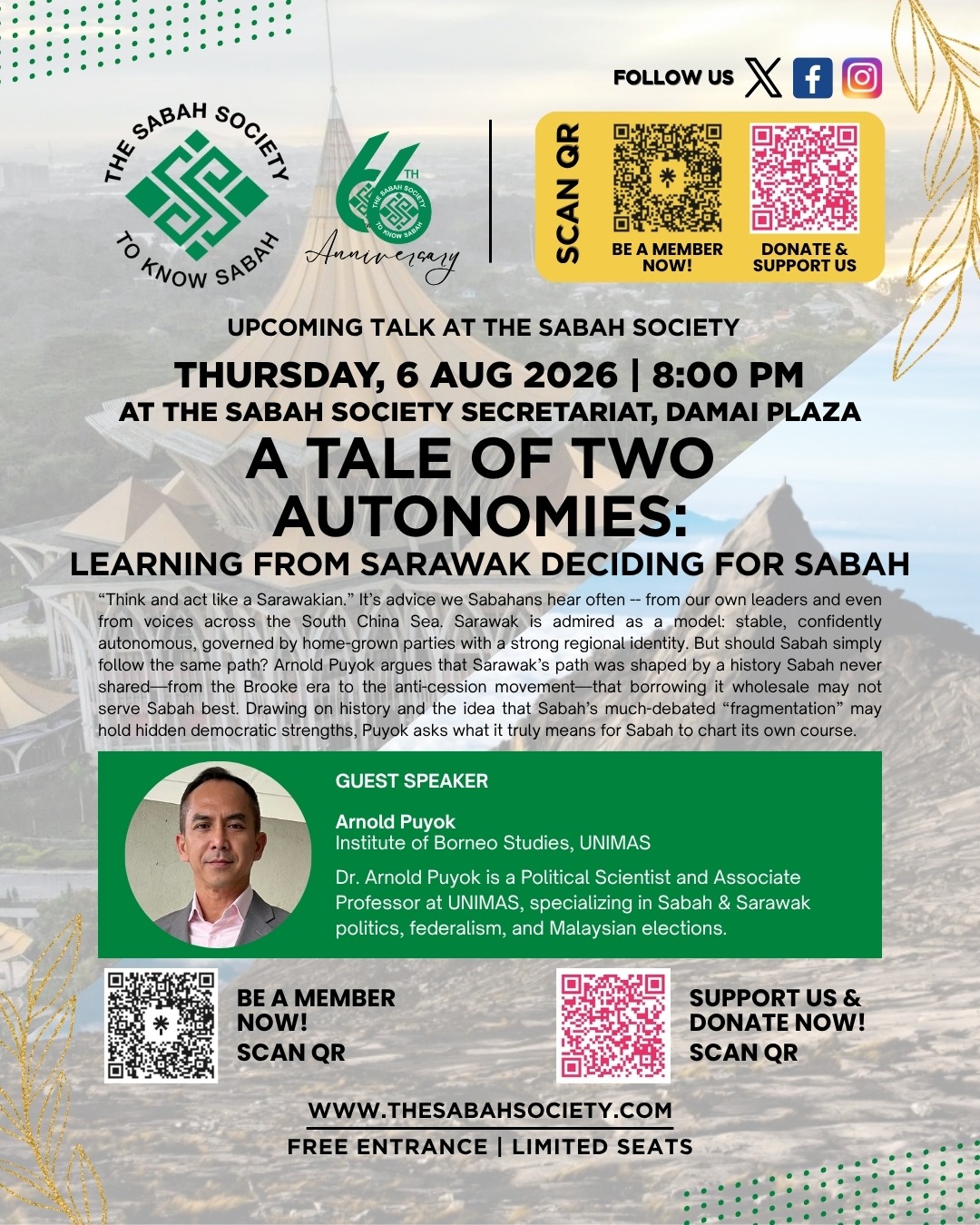
“Think and act like a Sarawakian.” It’s advice we Sabahans hear often—from our own leaders and even from voices across the South China Sea. Sarawak is admired as a model: stable, confidently autonomous, governed by home-grown parties with a strong regional identity. But should Sabah simply follow the same path? Arnold Puyok argues that Sarawak’s path was shaped by a history Sabah never shared—from the Brooke era to the anti-cession movement—that borrowing it wholesale may not serve Sabah best. Drawing on history and the idea that Sabah’s much-debated “fragmentation” may hold hidden democratic strengths, Puyok asks what it truly means for Sabah to chart its own course.

This event has passed.